
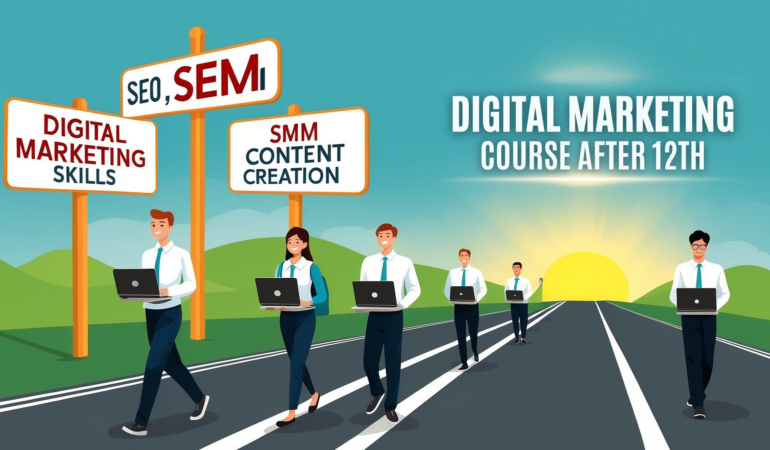
Digital Marketing Course After 12th: Best Courses, Skills, Institutes, and Career Opportunities
Did you know that over 60% of the world’s population is now online? This digital shift has created strong demand for skilled digital marketers. If you have just completed your 12th-grade exams, this is an ideal time to explore a digital marketing career path and start building practical skills early.
Table of Contents
- Why Choose a Digital Marketing Course After 12th?
- Top Digital Marketing Courses Available After 12th
- Key Skills Covered in Digital Marketing Courses
- Top Institutes Offering Digital Marketing Courses
- Career Opportunities After Completing a Digital Marketing Course
- Factors to Consider When Choosing a Digital Marketing Course
- Tips for Success in a Digital Marketing Career
- Frequently Asked Questions
- Conclusion
Why Choose a Digital Marketing Course After 12th?
Digital marketing allows you to influence audiences through content, campaigns, ads, and strategy across online platforms. Starting right after 12th gives you an advantage because you can begin learning practical tools and building a portfolio while many students are still deciding on a career direction.
A digital marketing course after 12th can help you gain an early foothold in an industry that consistently needs trained professionals. Instead of waiting years to become job-ready, you can start developing relevant skills through hands-on work, live projects, and campaign-based learning.
These programs are often far more practical than traditional classroom formats. Many courses focus on creating real campaigns, understanding audience behavior, using ad platforms, and learning performance tools that are widely used in the industry.
Why early learning matters
Starting after 12th can help you build experience, confidence, and a visible portfolio sooner. In digital marketing, demonstrated skills often matter as much as academic credentials.
Top Digital Marketing Courses Available After 12th
Certificate Programs
Certificate programs are ideal for students who want to explore digital marketing without committing to a full degree. Platforms such as Udemy, Coursera, and UpGrad offer accessible courses in content marketing, social media strategy, SEO, paid ads, and analytics.
These options work well for students who want flexibility. You can usually complete them at your own pace while balancing college, internships, or other commitments.
Diploma and Degree Programs
If you want a more structured and in-depth route, diploma or degree programs can be a strong choice. Many institutes now offer specialized training, and some provide focused tracks or full programs in digital marketing. You can also explore a dedicated digital marketing course for practical, career-oriented training.
These programs generally combine theory with project work. Students learn how to analyze consumers, build campaigns, manage channels, and understand key business metrics such as clicks, conversions, and ROI.
Premier and Master Programs
Students looking for advanced or premium learning options can consider specialized programs from reputed institutions. Some courses include mentorship, advanced tools, and a more intensive learning environment. Programs from providers such as IIM and NIIT-style specialized digital marketing tracks are often positioned as premium upskilling pathways.
These programs may also offer exposure to current marketing technologies, industry experts, and career support that can strengthen employability.
Key Skills Covered in Digital Marketing Courses
Digital marketing goes far beyond posting content on social media. A well-designed course usually covers the full performance and branding ecosystem needed to market effectively online.
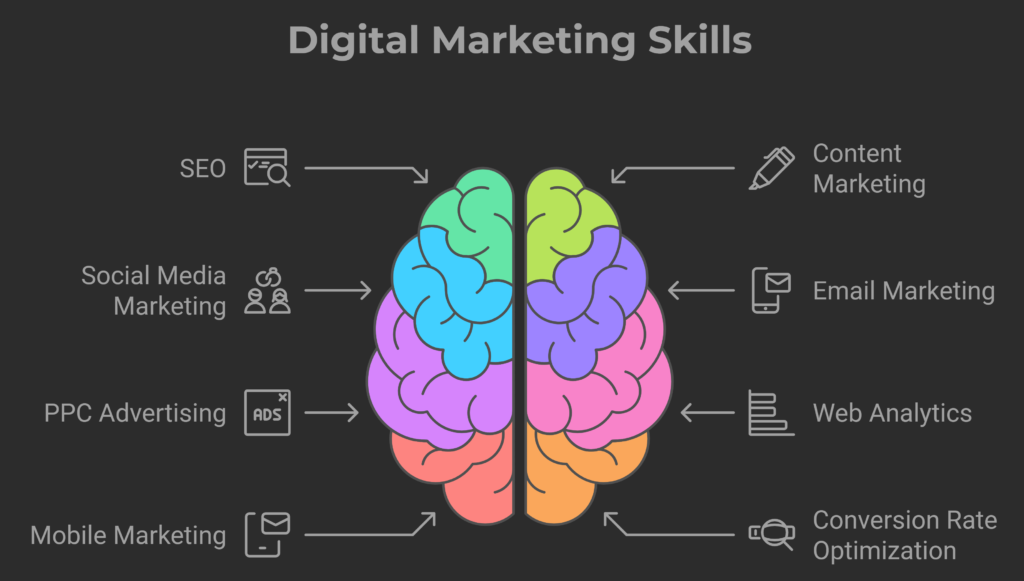
- SEO: Learning how to improve website visibility in search engines.
- Content Marketing: Creating useful, relevant content that attracts and engages users.
- Social Media Marketing: Building brand presence and audience engagement across social platforms.
- Email Marketing: Using targeted communication to nurture leads and retain customers.
- PPC Advertising: Running paid campaigns that focus on measurable traffic and conversions.
- Web Analytics: Interpreting data to improve campaign performance and user experience.
- Mobile Marketing: Reaching users effectively on smartphones and mobile-first channels.
- Conversion Rate Optimization: Improving landing pages and user journeys to increase results.
Many courses also provide practical experience with tools such as Facebook Ads, SEMrush, and LinkedIn Ads, helping students move from theory to execution quickly.
Core outcome of a good course
The best programs do not just teach concepts. They train students to plan campaigns, use tools, read dashboards, optimize content, and make data-backed decisions.
Top Institutes Offering Digital Marketing Courses
Not every course offers the same depth, structure, or practical exposure. Choosing the right institute can shape both your learning quality and your career momentum.
- Digital Marketing – Course – Online@IIMA: Known for a practical approach and strong brand value.
- NIIT: Offers courses that combine short-term skill development with long-term employability goals.
- Webinnovators Academy: Known for agency-based learning and 15+ certifications.
Institutes with strong faculty, practical training, and industry links can help students transition more smoothly into internships, freelance work, or entry-level roles.
Career Opportunities After Completing a Digital Marketing Course
Completing a digital marketing course opens multiple career paths. Because digital marketing includes content, search, ads, analytics, and automation, students can specialize based on their interests and strengths.
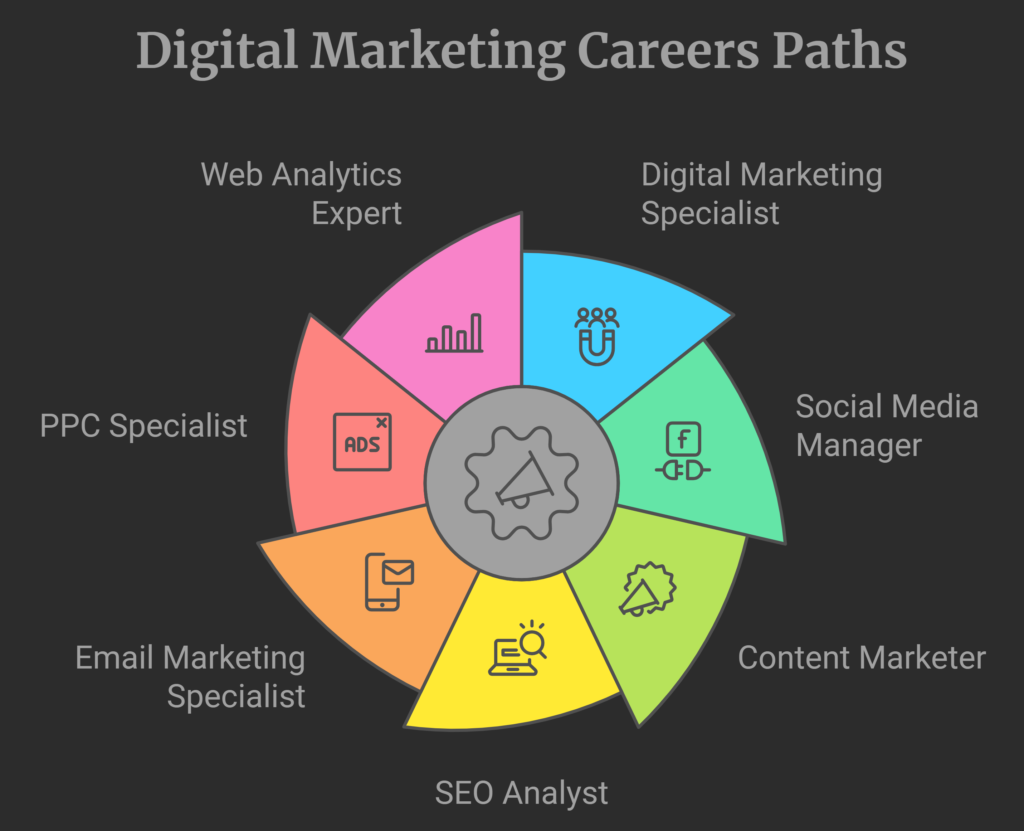
- Digital Marketing Specialist: Handles broad online marketing responsibilities across channels.
- Social Media Manager: Builds social strategy, engagement, and brand communication.
- Content Marketer: Creates and manages content that supports awareness and conversions.
- SEO Analyst: Optimizes websites and content for better search engine performance.
- Email Marketing Specialist: Designs campaigns, automation flows, and retention strategies.
- PPC Specialist: Manages paid search and paid social campaigns for performance outcomes.
- Web Analytics Expert: Translates digital data into actionable business insights.
You can also choose the entrepreneurial route and build your own digital marketing agency once you gain enough practical experience and confidence.
Career flexibility is a major advantage
Digital marketing supports agency jobs, in-house roles, freelancing, consulting, and entrepreneurship. That flexibility makes it especially attractive for students starting early.
Factors to Consider When Choosing a Digital Marketing Course
Selecting the right course can make a major difference in how quickly you become job-ready. Focus on training quality, relevance, and practical outcomes rather than just marketing claims.
- Course Duration: Choose a format that matches your availability and learning goals.
- Course Content: Make sure the syllabus covers SEO, content, social media, paid ads, analytics, and optimization.
- Learning Mode: Decide whether online, offline, or hybrid learning suits you best.
- Practical Training: Prioritize courses that include live projects, campaign practice, and tool exposure.
- Placement Assistance: Career support can be valuable when looking for your first role.
- Faculty Expertise: Learn from trainers with genuine industry experience.
- Fees: Compare quality and affordability before enrolling. You can review options for a digital marketing course that fits your budget.
The right course is the one that aligns with your career goals, budget, learning style, and preferred depth of training.
Tips for Success in a Digital Marketing Career
Success in digital marketing depends on both technical knowledge and continuous growth. Students who learn consistently and apply their skills early tend to progress faster.
- Build a Strong Portfolio: Showcase projects, campaigns, content samples, and measurable outcomes.
- Stay Updated: Platforms, algorithms, and trends evolve quickly, so continuous learning is essential.
- Network Professionally: Opportunities often come through industry connections and online visibility.
- Gain Real Experience: Freelance assignments, internships, and small projects can create strong practical exposure.
- Find Your Niche: Specializing in SEO, paid ads, content, or analytics can help you stand out.
- Use Creativity Strategically: Strong ideas matter, but performance improves when creativity is backed by data.
According to College Dunia, students can begin preparing for a digital marketing career as early as after their 10th grade. For students who are reading this after 12th, that means the journey can start immediately.
Digital marketing rewards experimentation, adaptability, and execution. The more you practice, the more valuable your skills become.
Frequently Asked Questions
Can I do a digital marketing course right after 12th?
Yes. Many certificate, diploma, and specialized training programs are open to students who have completed their 12th-grade education. This is a common starting point for beginners entering the field.
Which digital marketing course is best after 12th?
The best course depends on your goals. Certificate programs are useful for flexibility and quick exposure, while diploma or advanced programs are better for structured learning, live projects, and stronger career preparation.
What skills are usually taught in digital marketing courses?
Most quality courses include SEO, content marketing, social media marketing, email marketing, PPC advertising, analytics, mobile marketing, and conversion rate optimization, along with hands-on tool training.
What jobs can I get after completing a digital marketing course?
Common roles include digital marketing specialist, social media manager, content marketer, SEO analyst, email marketing specialist, PPC specialist, and web analytics expert. Some learners also move into freelancing or agency work.
How do I choose the right digital marketing institute?
Look at course depth, trainer expertise, live project access, placement support, flexibility, certification value, and fees. Practical exposure is especially important if your goal is to become job-ready quickly.
Conclusion
A digital marketing course after 12th can be a smart and practical way to begin building a future-ready career. With the right training, students can learn in-demand skills, gain hands-on experience, and start creating a portfolio that demonstrates real capability.
Whether you choose a flexible certificate program, a structured diploma, or an advanced institute-led course, the key is to focus on practical learning and consistent skill development. Digital marketing offers wide career flexibility, strong growth potential, and opportunities across industries.
With the right course and determined effort, you can start shaping your digital marketing career much earlier than most people expect.